Where & How to Buy Rope
How to Choose Rope
Choosing the right rope is one of the most important decisions for anyone exploring rope work, whether you’re new or experienced. When comparing bdsm rope types, factors like material, diameter, texture, and strength all matter, especially if you’re selecting bondage rope for comfort, control, and safety. Natural fibers such as jute and hemp are often considered the best rope for BDSM due to their grip and traditional feel, while synthetic options can be a good rope for beginners because they’re softer and easier to maintain. For more advanced practices, including rope bondage suspension, load ratings, weave consistency, and proper care become critical considerations. Understanding how different ropes behave under tension and against the skin helps you choose bondage.rope that matches your skill level, intended use, and aesthetic, while supporting safer, more confident rope experiences.
Jute
Jute is a naturally strong and compact rope, but it can sometimes bristle. When it is well-conditioned, Jute can feel amazing to be tied up in. Undyed jute is often a golden color. Some people are allergic to Jute. If you are allergic to Jute, hemp is a good alternative.
Hemp
Hemp is naturally smoother (and often has a slight smell to it), and when it is conditioned well it can feel incredible to be tied up in. Undyed hemp is usually a greyish color.
Silk
Silk is perhaps the most expensive choice, but its smooth, silky quality makes it strikingly beautiful to tie up in.
Cotton
Cotton also feels very soft, but in its give, it shifts and tightens, making the knots virtually impossible to undo.
I don’t recommend cotton rope for learning Shibari at all — either the beginner material or anything more advanced. Cotton is too challenging to work with, even just learning the basics, so I advise against using cotton at all.
Some non-shibari styles of rope bondage prefer cotton. Those styles typically stick to a set of lock-offs that work for cotton. For the frictions, knots, & patterns you will learn in Shibari, cotton is not a good choice.
I don’t recommend cotton rope for learning Shibari at all — either the beginner material or anything more advanced. Cotton is too challenging to work with, even just learning the basics, so I advise against using cotton at all.
Some non-shibari styles of rope bondage prefer cotton. Those styles typically stick to a set of lock-offs that work for cotton. For the frictions, knots, & patterns you will learn in Shibari, cotton is not a good choice.
If you have any synthetic rope (like nylon or another plastic-based rope) lying around the house, use that for the beginner section before you invest in a set of ropes.
When you are ready to invest in ropes, decide between Jute, Hemp, or Silk by asking some friends or at a rope club to try them out. (Most riggers use jute or hemp. Silk is more specialized.)
You may be allergic to jute, which is a good reason not to rush purchasing a lot of rope before you've really tried it out. I recommend that you start out slow and try different options before investing heavily in a set of ropes.
When you are ready to buy your first set, you will need five lengths, typically sold in 8-meter lengths (26.2 feet). Some US-suppliers measure to 30′ foot (or 9.1 meters).
You will also need two half-lengths, 13-15 feet (4 meters) lengths of rope to start with Shibari. (I also like having a few "short bits" of 9-foot rope or less.)
If you are buying a spool, it will likely be sold in 150-foot (46-meter) or 300-foot lengths (92 meters)
You can buy it from the supplier and cut it yourself, carefully knotting the ends as you cut each piece (see below).
When you are ready to invest in ropes, decide between Jute, Hemp, or Silk by asking some friends or at a rope club to try them out. (Most riggers use jute or hemp. Silk is more specialized.)
You may be allergic to jute, which is a good reason not to rush purchasing a lot of rope before you've really tried it out. I recommend that you start out slow and try different options before investing heavily in a set of ropes.
When you are ready to buy your first set, you will need five lengths, typically sold in 8-meter lengths (26.2 feet). Some US-suppliers measure to 30′ foot (or 9.1 meters).
You will also need two half-lengths, 13-15 feet (4 meters) lengths of rope to start with Shibari. (I also like having a few "short bits" of 9-foot rope or less.)
If you are buying a spool, it will likely be sold in 150-foot (46-meter) or 300-foot lengths (92 meters)
You can buy it from the supplier and cut it yourself, carefully knotting the ends as you cut each piece (see below).
Nylon
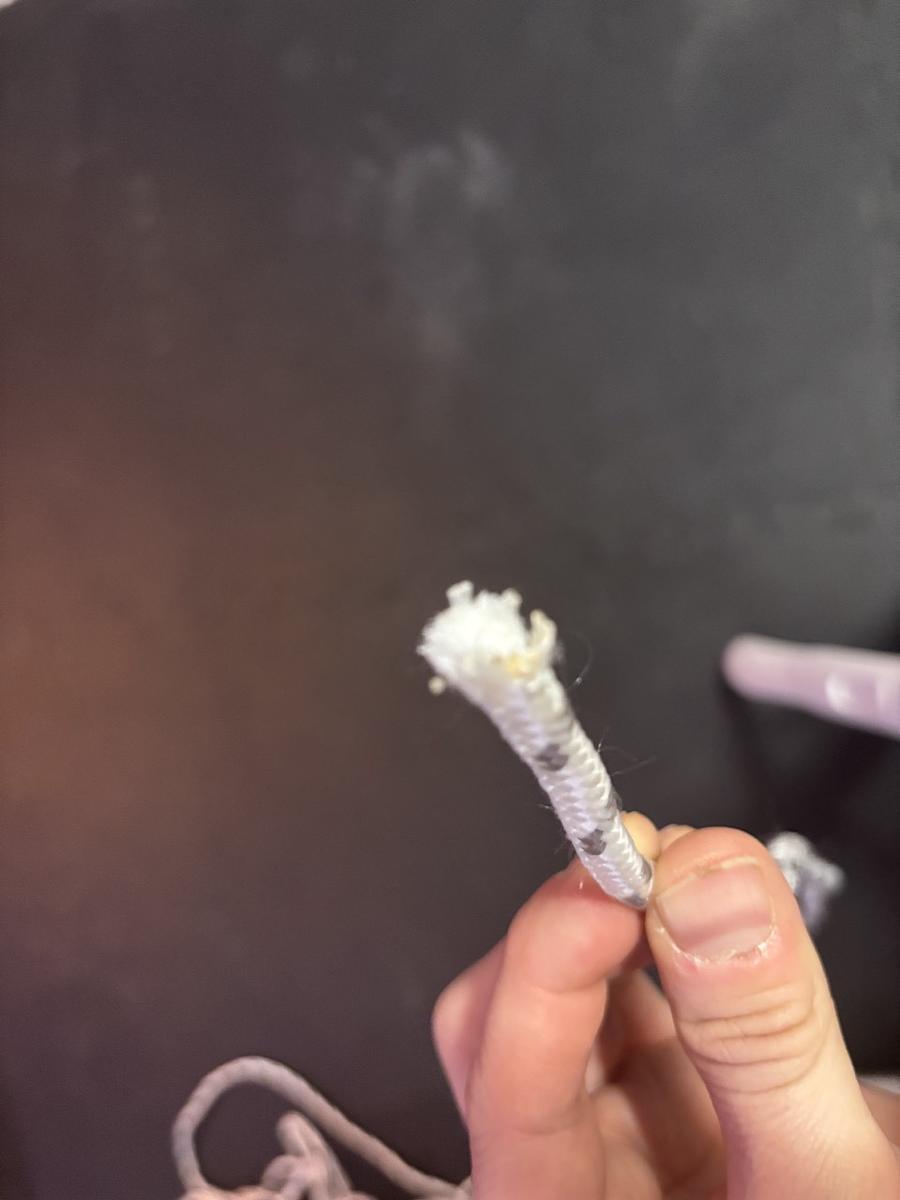
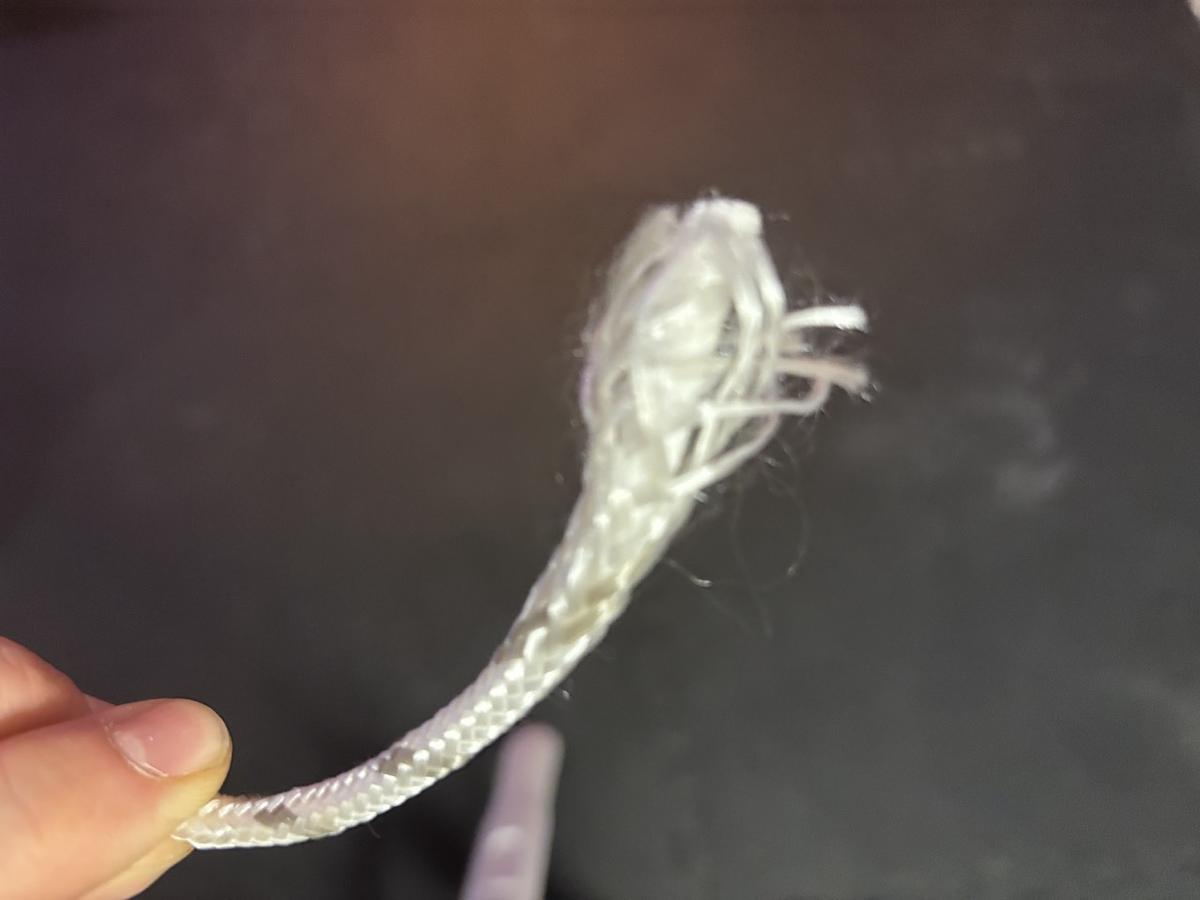
Nylon rope with frayed end
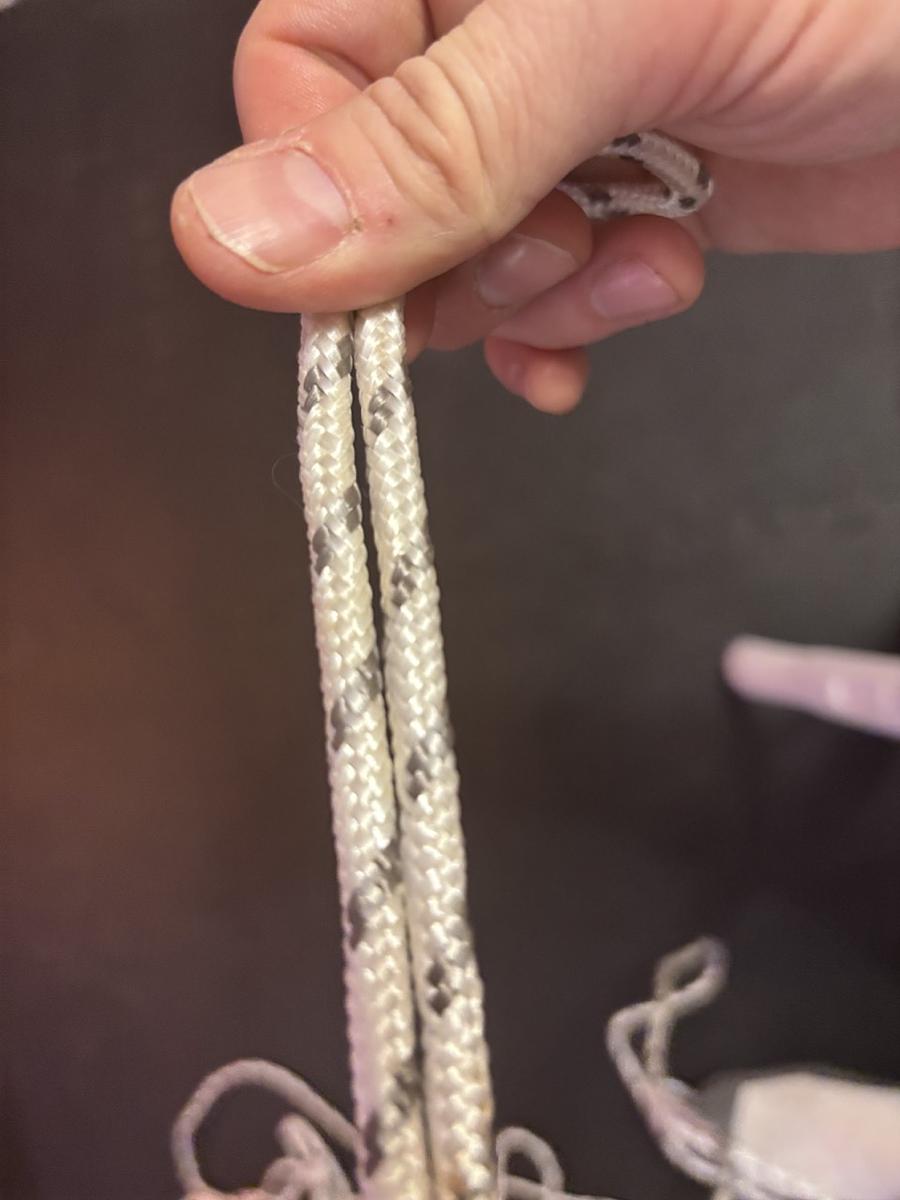
Nylon (synthetic fiber) is cheaper and very strong. It is made up of a core and shell, which you will see if you cut it open.
Typically, it is not the best floor tying, but it is acceptable for learning the basics (square knots, single-column, double-column).
Nylon rope is perfectly usable, and some people really enjoy working with it. That said, the Shibari taught in this curriculum focuses on an important skill called holding tension. You’ll learn that later, but it’s worth knowing now that your rope choice affects how firmly you can grip the rope, how quickly your hands can move, and how much friction—or rope burn—you create for your bottom.
Typically, it is not the best floor tying, but it is acceptable for learning the basics (square knots, single-column, double-column).
Nylon rope is perfectly usable, and some people really enjoy working with it. That said, the Shibari taught in this curriculum focuses on an important skill called holding tension. You’ll learn that later, but it’s worth knowing now that your rope choice affects how firmly you can grip the rope, how quickly your hands can move, and how much friction—or rope burn—you create for your bottom.
Nylon works fine for learning the basics, including floor Shibari. Just keep in mind that it behaves differently than natural fibers like jute. If you move your hands at the same speed you would with jute, you’ll notice more rope burn on your own hands, so your handling will naturally need to slow down. For bottoms tied directly on skin, that extra friction can be much more noticeable, especially if they move or struggle. If you’re tying over clothing, this is usually less of an issue.
One advantage of nylon is how easy it is to finish the ends. Because it’s a synthetic fiber, you can simply melt the ends after cutting, as shown in the video below. The plastic fuses into a clean, sealed tip, so there’s no need to whip or knot the ends. (see video below)
Burning end of a nylon rope

Knotted Ends vs. Whipped Ends
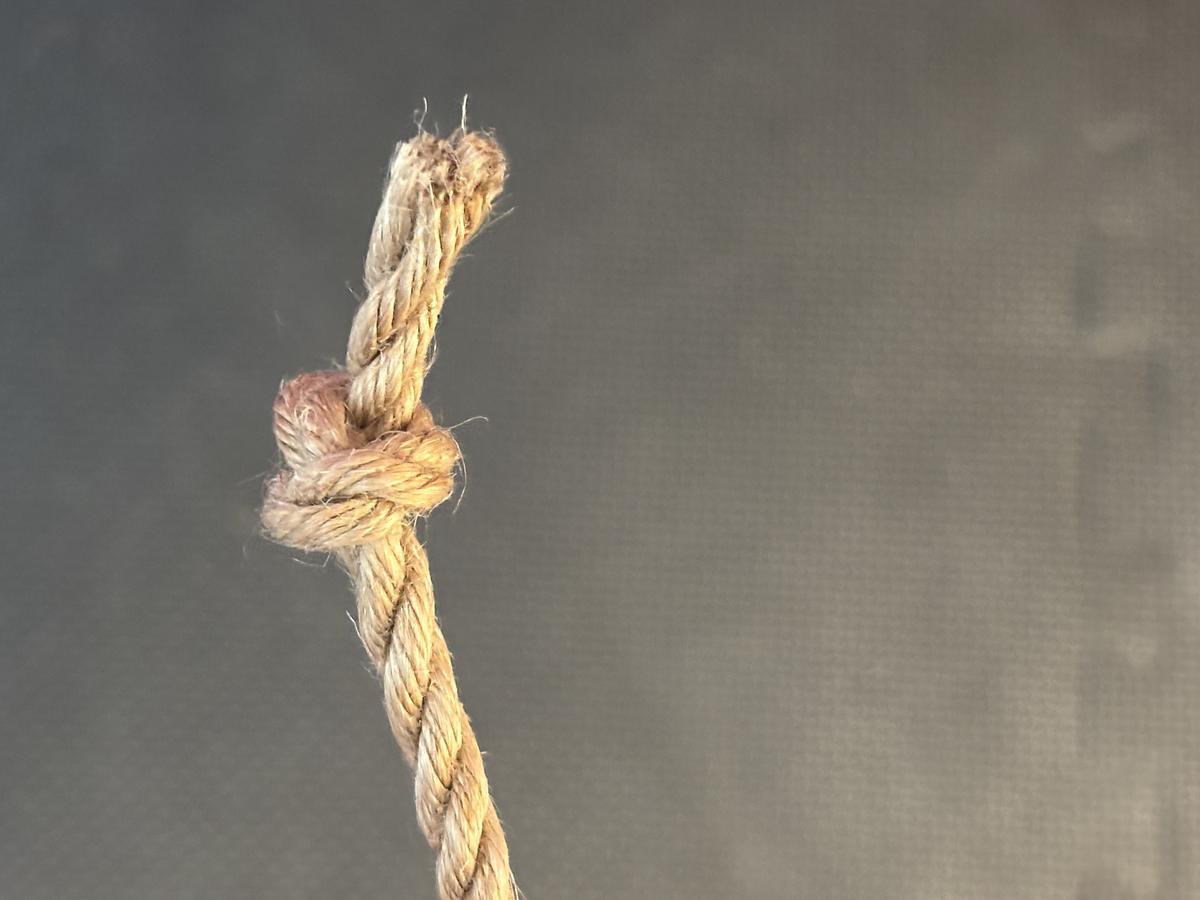
Knotted end
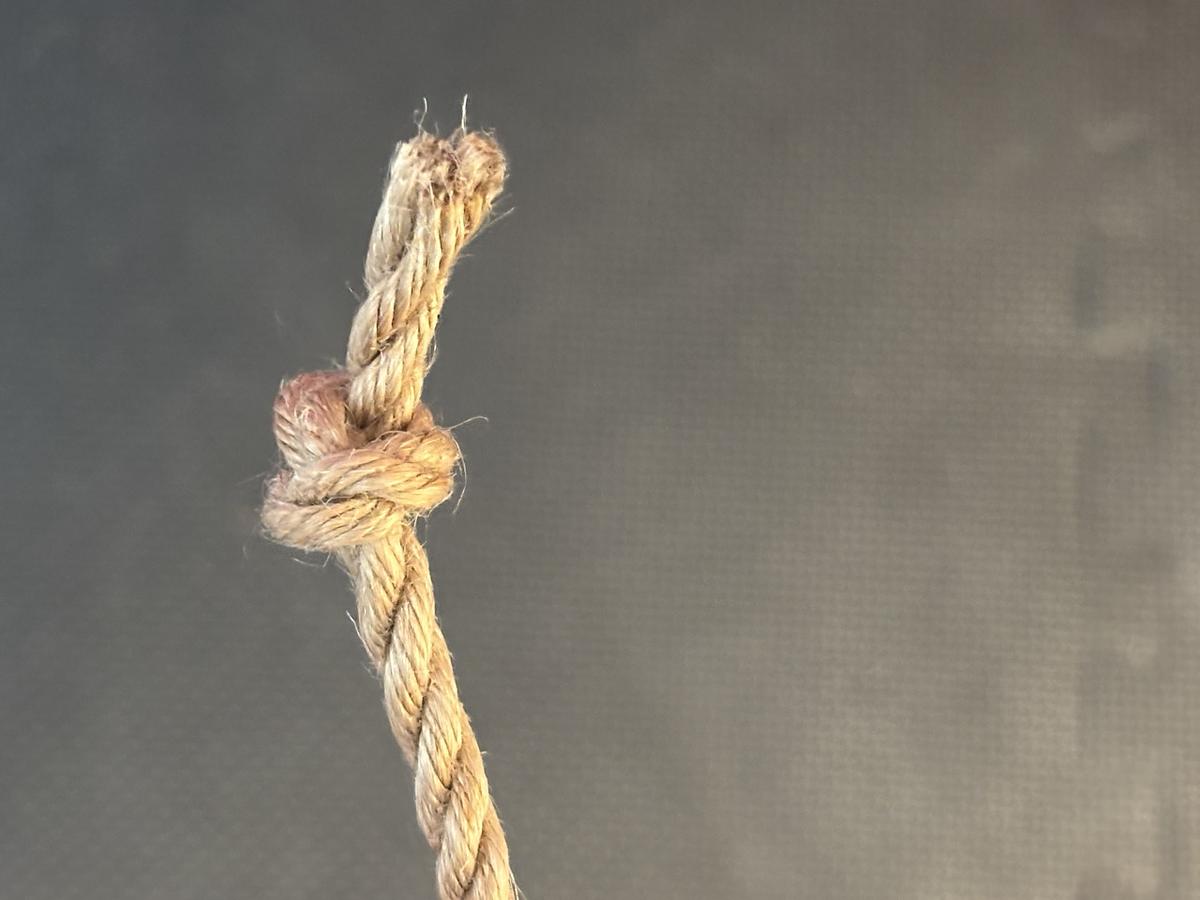
Knotted end
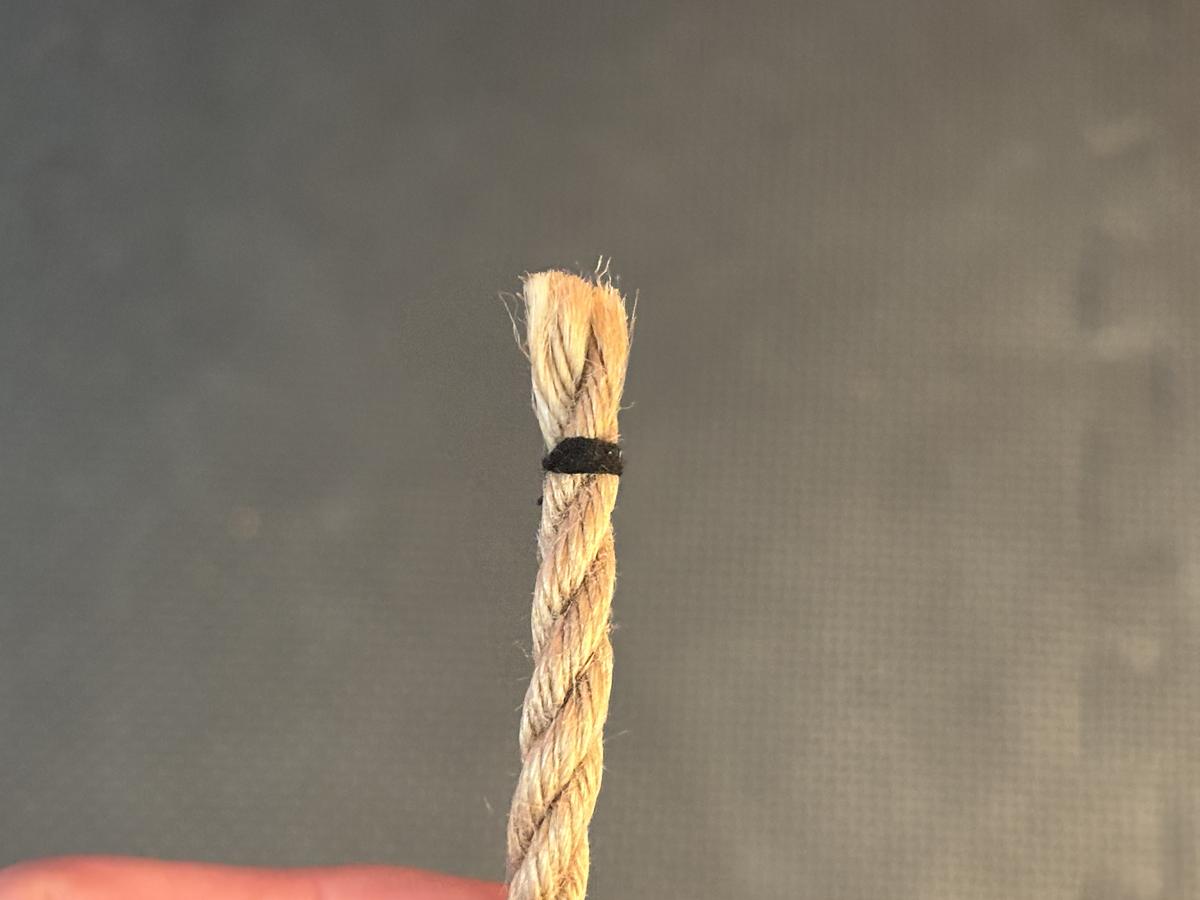
Whipped end (natural fiber rope with a black whipping)
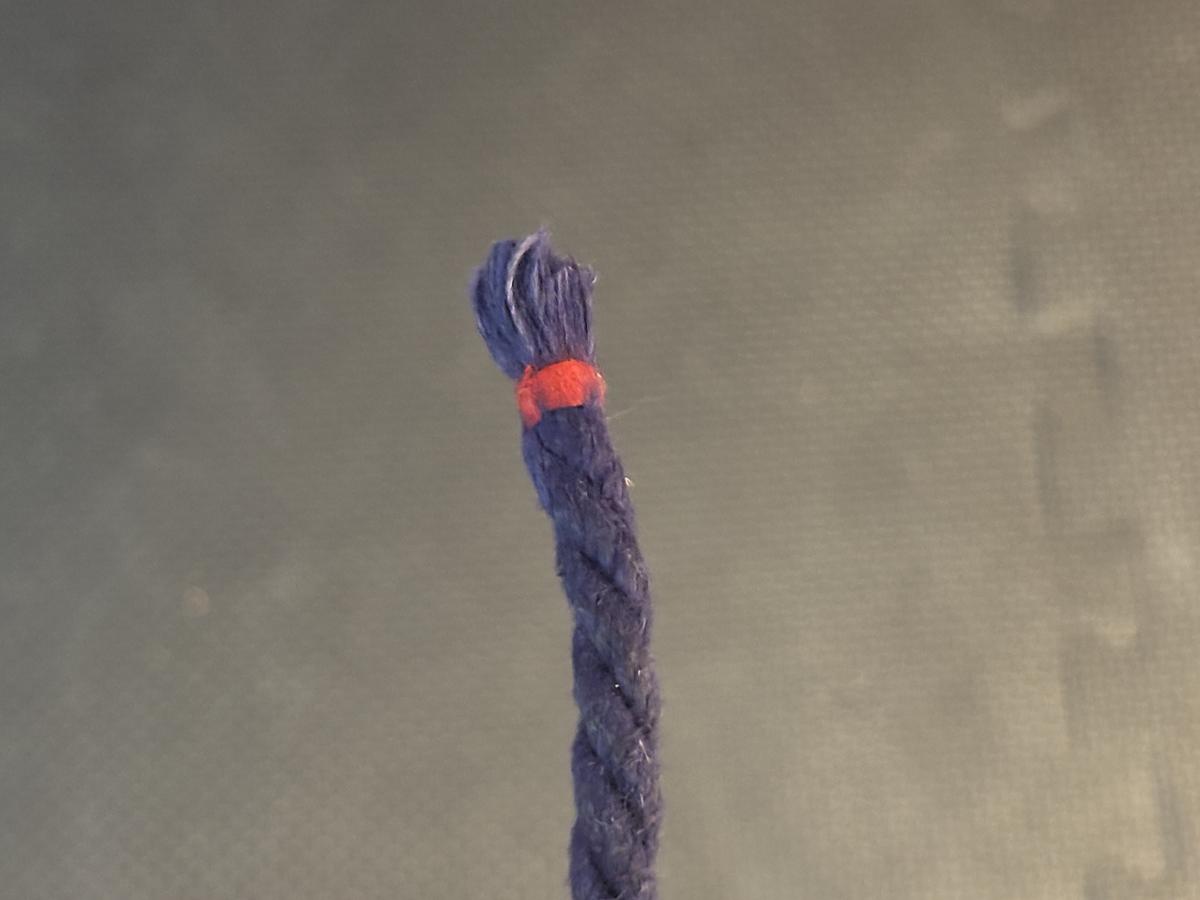
Whipped end showing blue rope with a red whipping
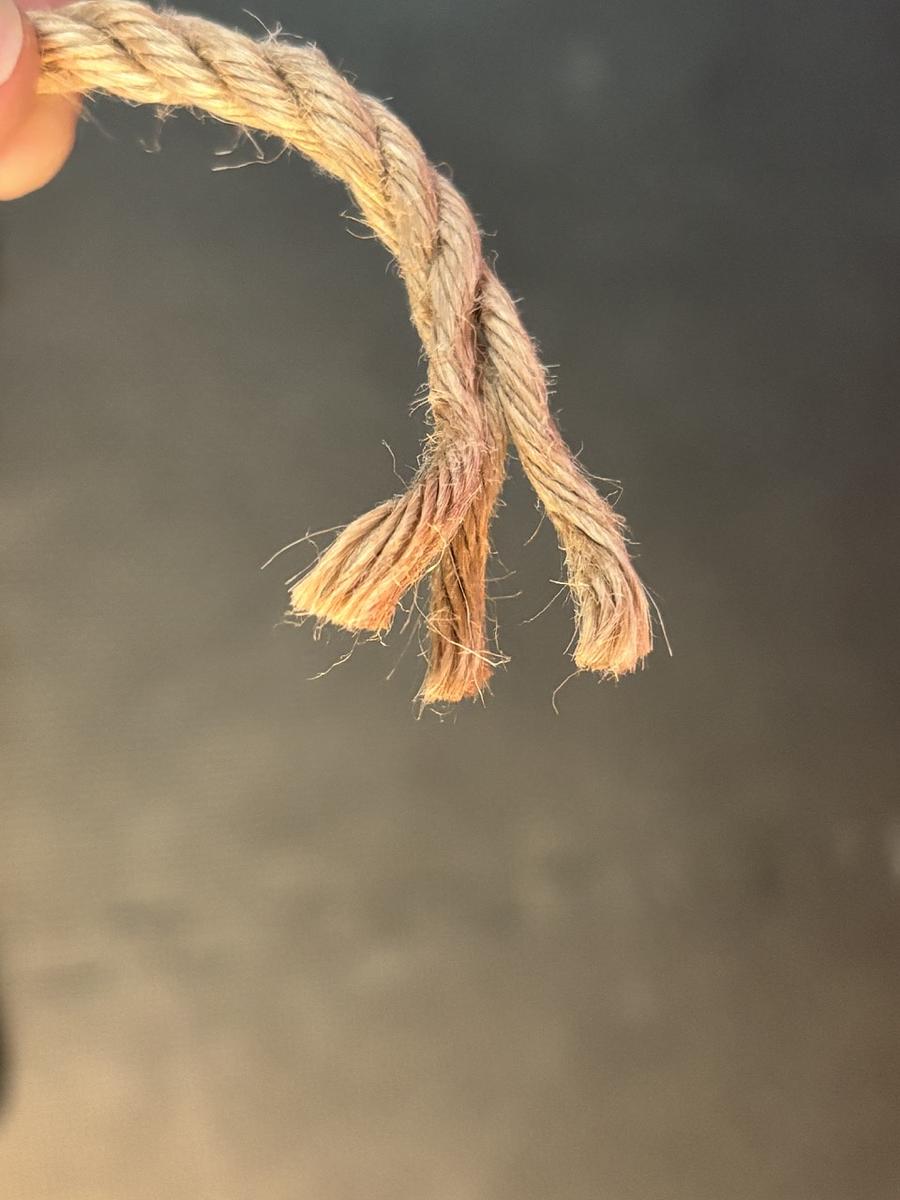
Frayed rope
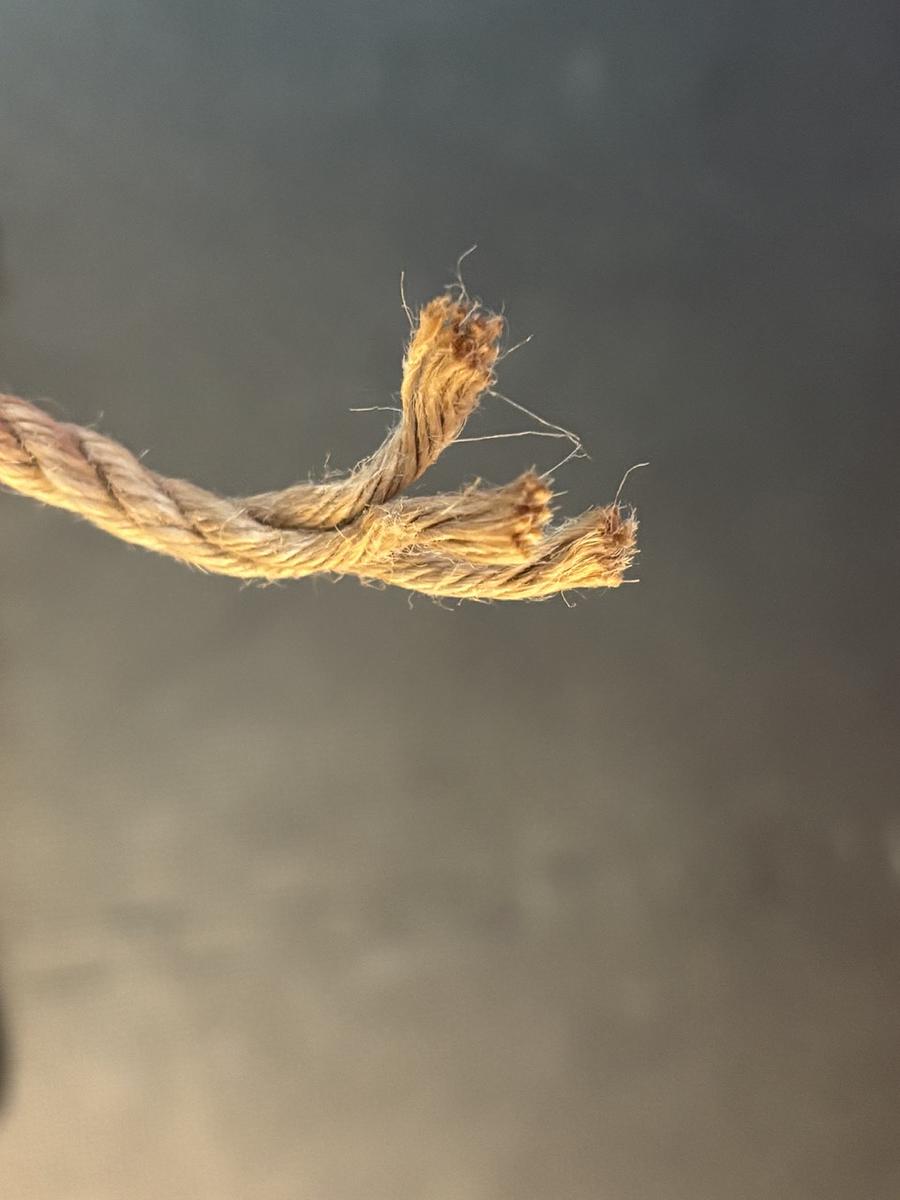
Frayed rope
Ropes are usually sold either with the ends already knotted or on a spool that you cut to length yourself.
If the ends aren’t secured, the rope will quickly begin to fray. Most Shibari rope is a three-strand laid rope, meaning it’s made of natural fibers twisted together and held in place by how the ends are finished. Once that fastening is removed—such as when you cut rope from a spool—the strands will start to come apart.
Many experienced riggers tie quite happily with knotted ropes. When joining ropes, a simple lark’s head can be used instead of a square knot. This is something you’ll learn soon as your rope skills develop.
Others, myself included, prefer ropes without knots. Knots add bulk and can be harder to pull through ties, which changes how the rope moves in your hands.
If you’d like to finish your ropes without knots, you can whip the ends instead. This requires a needle, thread, and a bit of basic hand-sewing skill. If that sounds doable, the How to Whip Your Ropes with Needle & Thread page will walk you through the process.
Conditioning
I recommend you buy conditioned or partially conditioned rope.
However, some people prefer unconditioned rope. Conditioning your own rope is a time-consuming and risky process. It is risky because you could condition it incorrectly—for example, over-oiling or over-waxing it.
If you do want to buy unconditioned rope...
At a minimum, you will want to 1. “break” (run it back and forth through a hook) and 2. “torch” (pass it quickly over a hot stove—don't burn your house down!) to make it more pliable.
This leaves the rope with very little oil, but that will hold tension extremely well. If you do buy unconditioned rope, try stopping here (breaking & torching) and see how that rope ties with. At first, your bottoms will notice the rope is a little rough. As you tie with it, the natural oils from your skin will transfer to the rope, making it softer. If you're happy with this outcome, this is usually the best option for unconditioned rope.
If you do want to buy unconditioned rope...
At a minimum, you will want to 1. “break” (run it back and forth through a hook) and 2. “torch” (pass it quickly over a hot stove—don't burn your house down!) to make it more pliable.
This leaves the rope with very little oil, but that will hold tension extremely well. If you do buy unconditioned rope, try stopping here (breaking & torching) and see how that rope ties with. At first, your bottoms will notice the rope is a little rough. As you tie with it, the natural oils from your skin will transfer to the rope, making it softer. If you're happy with this outcome, this is usually the best option for unconditioned rope.
3. Oiling — risky!
Some suppliers recommend using a small amount of oils — jojoba, mineral oil, lavender oil — to condition your rope; however, this can easily lead to over-oiled ropes, so I recommend against it. If you do go down this path, be warned that once over-oiled, your oily rope will stay oily forever. The recommended technique is to use a cloth towel dabbed with oil and run the rope through a fold in the towel by hand, lightly brushing each part of the rope with the oil.
4. Waxing — I personally have never gotten this right, and every time I've tried this, I've gotten overwaxxed ropes.
Although steps 1 & 2 are reasonable for conditioning unconditioned ropes, I recommend against steps 3 & 4.
Remember: It's easy to mess up conditioning and extremely time-consuming, so I strongly recommend buying conditioned rope!
Although steps 1 & 2 are reasonable for conditioning unconditioned ropes, I recommend against steps 3 & 4.
Remember: It's easy to mess up conditioning and extremely time-consuming, so I strongly recommend buying conditioned rope!
Online Retailers
Floor & Mounting Retailers
Note: Although I may like these suppliers, listing here cannot imply safety endorsement.
Rigs typically should be rated to hold up to a specific weight.
Spice Rack Market – https://spicerack.market/bondage/
Tetruss – https://tetruss.com/
A note on bamboo for suspension points
No natural bamboo is "rated" to be weight-bearing the way hardware is — there's no test certificate or stamped load figure behind a bamboo pole, and any seller who implies otherwise is offering an assurance, not a specification. The best you can do is gather the facts that actually govern strength and make an informed judgment.
Ask the seller three things: the species (tropical structural genera like Bambusa, Guadua, and Dendrocalamus, or dense Phyllostachys edulis/Moso, are the ones used for load-bearing; garden and decor species like golden bamboo tend to run thin-walled and small), the wall thickness in millimeters, and whether it's been flame/fire-cured and sold specifically for suspension rather than dried as craft stock. Wall thickness matters more than outer diameter, since the wall is what resists bending. Suspension-grade poles generally sit around 8–12 mm, and anything in the 4–6 mm range is light for an overhead point.
If a weight figure is quoted, pin down whether it's a breaking point or a safe working load, and whether it accounts for dynamic movement.
Even a well-chosen pole is the contact element, not the rated component: it should span between two rated anchor points with proper hardware carrying the real load, get inspected before every use, and be retired the moment it cracks, creaks, or sounds dull when tapped.
When in doubt, buy from a dedicated suspension vendor and get hands-on guidance from experienced riggers — the pole is one part of a system.
Bamboo USA – https://bamboousashop.com
Crafts Bamboo Shop (Etsy) - https://www.etsy.com/shop/CraftsBamboo
Ask the seller three things: the species (tropical structural genera like Bambusa, Guadua, and Dendrocalamus, or dense Phyllostachys edulis/Moso, are the ones used for load-bearing; garden and decor species like golden bamboo tend to run thin-walled and small), the wall thickness in millimeters, and whether it's been flame/fire-cured and sold specifically for suspension rather than dried as craft stock. Wall thickness matters more than outer diameter, since the wall is what resists bending. Suspension-grade poles generally sit around 8–12 mm, and anything in the 4–6 mm range is light for an overhead point.
If a weight figure is quoted, pin down whether it's a breaking point or a safe working load, and whether it accounts for dynamic movement.
Even a well-chosen pole is the contact element, not the rated component: it should span between two rated anchor points with proper hardware carrying the real load, get inspected before every use, and be retired the moment it cracks, creaks, or sounds dull when tapped.
When in doubt, buy from a dedicated suspension vendor and get hands-on guidance from experienced riggers — the pole is one part of a system.
Bamboo USA – https://bamboousashop.com
Crafts Bamboo Shop (Etsy) - https://www.etsy.com/shop/CraftsBamboo